
 Deepak Sarup
Jun 15, 2026



Saudi Arabia's loyalty market is on a steep climb. One 2026 industry market report values it at $712.3 million in 2025, projecting growth to $1.27 billion by 2030, an 11.9% compound annual growth rate . But the spending curve hides a structural problem: customers across banking, insurance, and automotive are more spoilt for choice than ever, and chronically under-engaged once they have signed up. The Kingdom's Financial Sector Development Program alone is targeting a near-tripling of licensed fintechs by 2025, and every major retailer now runs some version of a rewards program, yet most of that infrastructure measures enrolment, not relationship. The economics argue for the opposite priority: Bain & Company's research shows that in financial services, a 5% increase in customer retention produces more than a 25% increase in profit , while acquiring a new customer remains far costlier than keeping one. Vision 2030 only sharpens the opportunity: a cashless-economy mandate, a digital-services build-out, and a population in which 69.4% of Saudi citizens are under the age of 35, per the latest official government data are converging to make loyalty a board-level retention lever, not a marketing afterthought. This guide is written for the people building that lever: B2B decision-makers, not the consumers who will eventually swipe the card.
For two decades, "loyalty" in Saudi Arabia meant points: spend, accumulate, wait, redeem. That model worked when a loyalty program was essentially a coupon book. It stops working once a generation raised on same-day delivery and on-demand everything is asked to wait months for a redemption that barely covers the transaction that earned it. The model replacing it does not ask customers to wait. It hands them instant, lifestyle-grade value: a round of golf, a dinner reservation, a spa morning, a free month of streaming, often the same day they qualify.
"Points may close a transaction, but experiences open a relationship," says Dhruv Verma, Founder and CEO of Thriwe. It is a useful way to separate the two models: one optimizes for the next purchase, the other for the next ten years of the relationship. Thriwe's own platform was built around this experience-led thesis from the outset, which is part of why the company has found early traction with Saudi B2B clients designing what comes after points. The shift also maps neatly onto Saudi demographics: a population this young, and this digitally fluent, does not experience "more points" as more valuable. It experiences access, status, and immediacy as more valuable, and a program that cannot deliver those in real time is, functionally, already behind.
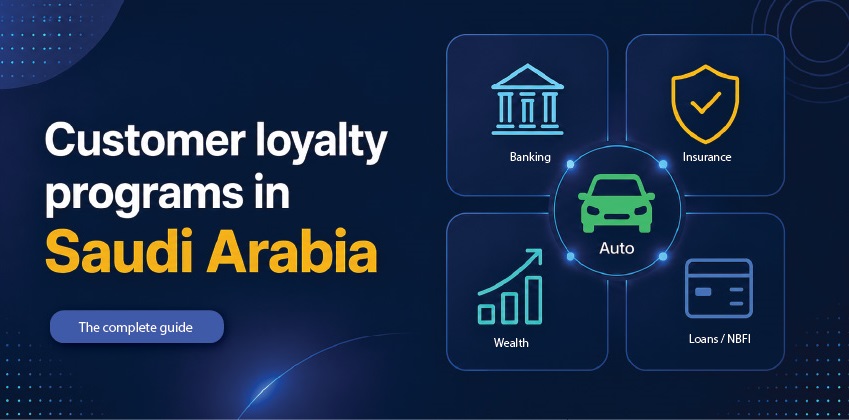
The mechanics of loyalty look different depending on what is being sold. A bank's challenge is commoditised cashback; an insurer's is near-zero engagement between policy purchase and renewal; a wealth manager's clients do not want points at all. What follows is a sector-by-sector breakdown: banking and fintech, insurance, wealth management, loans and NBFIs, and automotive, written for the teams designing these programs, not the customers redeeming them.
Saudi banking is under real competitive pressure. Vision 2030's Financial Sector Development Program is targeting growth in licensed fintech firms from 82 in 2020 to roughly 230 by 2025, and further to 525 by 2030. SAMA moved open banking from sandbox testing into a formal licensing regime in March 2026, opening the door to a new wave of entrants competing for the same wallet share. For banks, loyalty has stopped being a marketing line item. It is now one of the few retention levers regulators have not touched.
Saudi banking is under real competitive pressure. Vision 2030's Financial Sector Development Program is targeting growth in licensed fintech firms from 82 in 2020 to roughly 230 by 2025, and further to 525 by 2030. SAMA moved open banking from sandbox testing into a formal licensing regime in March 2026, opening the door to a new wave of entrants competing for the same wallet share. For banks, loyalty has stopped being a marketing line item. It is now one of the few retention levers regulators have not touched.
Cashback is table stakes now. Nearly every card in the Kingdom offers some version of it, which has produced a race to the bottom on percentage points rather than meaningful differentiation. Programs like Al Rajhi Bank's Mokafaa, redeemable across 200+ partner merchants nationwide, and SNB's LAK rewards on AlAhli cards, have set a credible domestic benchmark for points-based redemption. But both still leave a gap in lifestyle and experiential coverage: high-value Saudi cardholders increasingly want travel status, lounge access, concierge service, and golf privileges, categories a generic points catalogue rarely covers well. Thriwe's travel and lifestyle benefit stack exists for exactly that gap, a white-labelled layer of airport lounge access, priority check-in, and airport transfers that banks can plug into an existing card program rather than building a partner network from zero.
While banks debate cashback percentages, Saudi Arabia's largest telecom and payments group is already showing what frictionless, embedded loyalty looks like. stc automatically tiers customers into Tamayouz Gold , Platinum, or Diamond status based on the previous 12 months' spend, unlocking benefits (from car-rental discounts to dedicated partner offers) with no enrolment step required. Its companion Qitaf programme goes further, awarding points on essentially every bill payment, folding the reward directly into the transaction rather than treating it as a separate redemption journey. The lesson for traditional banks is structural: automatic tiering beats opt-in enrolment, and rewards embedded in the transaction beat rewards bolted on afterward. This is also where instantly redeemable digital perks (Amazon, Spotify, Uber, Careem) matter: Thriwe already connects Saudi banks to these partners directly, letting a reward post the same day a customer qualifies for it, not the same quarter.
Segment-based loyalty: how banks should reward differently across customer tiers
A mass-market customer, a premium cardholder, and a high-net-worth client are not the same customer wearing different account tiers. They want fundamentally different reward architectures.
|
Tier |
Primary Need |
Reward Architecture |
|
Mass-market |
Everyday value |
Digital perks, dining offers, cashback |
|
Premium |
Travel & status |
Lounge access, golf, priority travel benefits |
|
HNW / Private |
Recognition & access |
White-label concierge, experiential benefit layer |
The mistake most Saudi banks still make is running one loyalty mechanic across all three tiers, which means a heavy spender on a private banking card gets functionally the same offer as someone who uses their card twice a month. Segmentation is not a nice-to-have; it is the difference between rewarding engagement and accidentally training customers to expect less than they are worth.
Insurance is, structurally, a low-engagement product. Most policyholders interact with their insurer twice: at purchase, and at claim; and increasingly, at renewal, where they are shopping the market on price alone. Loyalty programs are one of the only levers insurers have to change that rhythm before it costs them the policy.
Reducing renewal churn with between-policy engagement
The core problem is a void: nothing happens between purchase and renewal, so when the renewal notice lands, price is the only thing the customer remembers comparing. Health and wellness rewards are a direct way to fill that void: gym membership access, spa visits, and Nahdi pharmacy discounts turn a health policy into a year-round relationship rather than an annual invoice. Motor insurers have an equivalent lever in roadside assistance perks and car-care benefits. The stakes are real: McKinsey's research on insurance customer experience found that policyholders typically interact with their carrier only once or twice a year (a touch frequency ten to twenty times lower than retail banking and low-touch relationships are precisely the ones most vulnerable to a competitor's renewal-season price quote. That's the gap Thriwe's health, wellness, and lifestyle benefits stack closes, as a white-label layer insurers can use without building a wellness ecosystem of their own.
Behaviour-based rewards: incentivising safe and healthy choices
Two models are worth borrowing. On motor, telematics-linked rewards (safe-driving scores tied to discounts or perks) align cleanly with Vision 2030's road safety agenda. On health, "vitality-style" models reward everyday wellness activity: steps, checkups, gym visits. Discovery Vitality is the global reference point here: the shared-value model now operates in more than 40 markets with over 40 million members worldwide, according to Discovery Limited's own corporate disclosures, and a RAND Europe study of more than 400,000 Vitality members found participants in its Apple Watch incentive programme sustained a 34% increase in physical activity, measurable behavioural change, not just engagement theatre. One framing note matters in the Saudi context: rewards built around behaviour rather than pricing sit more comfortably within Sharia-compliant design than interest-adjacent discount structures do. For insurers building this kind of model, Thriwe's sports & fitness, health centre, and wellness benefit stack is already a ready-made reward layer.
Cross-sell and upsell through loyalty: from single policy to full portfolio
Loyalty can also be the bridge from a motor policyholder to a health or life customer, an underused lever in Saudi insurance. A simple tiered mechanic works well: Silver (motor only) unlocks dining and digital perks; Gold (motor + health) adds travel benefits and lounge access. The mechanic does not need to be complex to work: it needs to make adding a second product feel like a status upgrade rather than a sales pitch. Thriwe's multi-category benefit portfolio already supports this kind of tiered unlock, so insurers don't need a separate vendor for each reward category.
For a high-net-worth client, "loyalty" was never about accumulating points. It is about feeling recognised, valued, and exclusively served. A program built on mass-market logic will, to this client, read as a mild insult.
Why HNW clients in KSA demand prestige, not points
High-net-worth clients do not redeem vouchers; they expect status signals and frictionless access. In Saudi Arabia's premium segment, golf, VIP event access, concierge service, and white-glove travel assistance carry more weight than any cashback percentage. The addressable population is growing fast. Henley & Partners projects Saudi Arabia will attract roughly 2,400 high-net-worth individuals in 2025, an eightfold jump from the estimated 300 who relocated in 2024, and UBS data shows the Kingdom's billionaire count rose more than 113% year-on-year in 2025. Wealth managers chasing this population need an engagement vehicle that matches it, and Thriwe's Premier Perks layer offers exactly that: a white-label concierge experience without the cost of building one internally.
Golf and sports as relationship tools for wealth management clients
In GCC business culture, golf is not a niche hobby; it is a relationship asset. Access and privileges signal prestige and create the kind of unstructured face time a boardroom meeting cannot. This is also where Thriwe's own history is directly relevant: the company began life in 2011 as GolfLan, built specifically to improve golf access across India, the Middle East, and Southeast Asia, before evolving into its current benefits platform . That origin shows up in the product today: sports club access and golf privileges through Thriwe's network function as both a reward and a genuine relationship-building tool for private bankers and wealth managers.
Experiential travel benefits as a retention tool for HNW portfolios
Travel is the single highest-value experiential benefit for this segment: airport lounge access, meet-and-greet, priority check-in, flight meal upgrades, and airport transfers form the baseline expectation at the premium tier. Thriwe's global partner network, spanning more than 130 countries , means these benefits travel with the client domestically and internationally, which matters for HNW clients who move between Riyadh, London, and Dubai as easily as across town. For a wealth manager, that's a CVP enhancer with no need to build an international partner network from scratch.
Loan products are inherently transactional and infrequent: a customer takes a loan, repays it, and can switch lenders next time with little real cost to doing so. Loyalty programs exist here to create stickiness between transactions, and the case is sharpening fast as Saudi Arabia's BNPL sector expands under a dedicated SAMA regulatory framework introduced in 2023, which today sits alongside a licensed consumer finance industry of more than 60 companies, a crowded field by any regional standard.
Rewarding responsible borrowing: loyalty mechanics for loan customers
The mechanic that works here sidesteps a compliance headache entirely: rather than rewarding on-time repayment with a rate reduction (which raises Sharia structuring questions), reward it with incremental lifestyle benefits instead. A customer who repays on time for 12 months might unlock Spotify, Amazon, or dining privileges, keeping the brand salient between loan cycles without touching pricing mechanics at all. Framed as a "lifestyle reward for loyalty" rather than a "discount for repayment," it is a playbook that barely exists yet in Saudi NBFI content, and a clear opening for lenders willing to be first.
Cross-sell and referral loyalty: turning one-product customers into multi-product ones
Personal loan customers who also hold a current account, insurance policy, or investment product carry meaningfully higher lifetime value and lower churn than single-product customers. Loyalty can be the bridge: referral rewards, where referring a friend unlocks a tier, or product-addition rewards, where adding a second product moves a customer up one. Kept simple and Sharia-compatible, the mechanic works well with Thriwe's digital and lifestyle benefit stack, rewards that are instantly deliverable, so the lender never has to build out its own points-management system.
Sharia compliance in NBFI loyalty design: what to watch
Three principles keep an NBFI loyalty program compliant: avoid framing rewards as interest equivalents, since lifestyle perks read as halal in a way rate-linked discounts can complicate; keep the reward structure transparent, with no gharar, or excessive uncertainty, in how points or perks are earned; and involve a Sharia scholar in reviewing program mechanics before launch, not after. Thriwe's experience operating across GCC markets, including its compliance with KSA regulatory requirements such as PCI DSS and data localisation, means these questions are typically familiar ground for NBFI partners rather than a fresh problem to solve from scratch.
A car purchase is a three-to-seven-year cycle, and the only reliable touchpoint in between is the service centre. If a dealership does not actively engage a customer during that gap, a competitor's offer eventually will. Saudi Arabia is one of the region's largest auto markets, with Toyota, Hyundai, Kia, and BMW all competing intensely for the same buyers. Vision 2030's EV targets are about to add a new dimension to that competition.
The aftersales loyalty opportunity: where auto brands win or lose customers
This is where automotive loyalty actually lives, not at the showroom but at the service bay. Oil changes, tyre rotations, and inspections are the highest-frequency touchpoint a dealership has, which makes them the natural loyalty engine: priority booking, complimentary service upgrades, and rewards for on-time servicing all reinforce a relationship that a one-time sale cannot. The data backs this directly. A 2025 study of Saudi Arabia's automotive aftersales sector, surveying 395 customers using structural equation modelling, found that service quality significantly drives customer engagement, with a path coefficient of 0.643, and noted that roughly 11 million vehicles in the Kingdom require regular maintenance. Loyalty programs built around service visits cost less to run than acquisition-driven marketing, and retain customers straight through to their next purchase cycle.
Lifestyle benefits as loyalty: keeping car customers engaged between purchases
Between service visits, a dealership still needs a reason to stay relevant. Car-related perks (rental discounts, roadside assistance, parking privileges) are an obvious starting point; Key Car Rental's own KSA loyalty programme, which lets members earn and redeem points across more than 50 branches nationwide, shows the model works at scale even within a single mobility category. Lifestyle crossover benefits (dining privileges, sports club access, travel perks) extend that value beyond the car itself. Thriwe's platform can give a dealership group a white-labelled lifestyle benefit suite across more than 30 Saudi cities without the group needing to build out individual partner relationships city by city, turning a switch to a competitor into something that feels like a lifestyle downgrade, not just a different logo on the hood.
EV loyalty in Saudi Arabia: a new frontier for automotive engagement
Saudi Arabia is investing heavily in EV infrastructure under Vision 2030, targeting 30% EV adoption in Riyadh by 2030, and the loyalty layer for that shift barely exists yet. Charging network perks, green-lifestyle rewards, and EV community access are all open ground for whichever brand moves first. A loyalty program built now, before the market matures, has a real chance to lock in brand preference before competitors even notice the opportunity.
Across every sector in this guide, five patterns repeat.
Thriwe operates across multiple Saudi cities today, backed by a global partner network spanning 130+ countries, built specifically to give banks, insurers, wealth managers, lenders, and automotive brands a ready-built lifestyle benefit suite rather than asking them to build one from scratch. The benefit stack spans travel, dining, golf and sports, health and wellness, and digital partners including Amazon, Spotify, Careem and Uber delivered through a white-label B2B2C platform that plugs into an existing card, policy, or loan program without deep technical integration. The platform is PCI DSS compliant and built around KSA's data localisation requirements, and its merchant network already includes a partnership with Landmark Group , among others active across the Kingdom's retail and banking sectors. For B2B teams designing customer loyalty rather than buying a points engine, that combination (local compliance, global reach, and an experience-led model built for it from day one) is the case for working with a partner rather than building internally.
Planning a loyalty program for your customers in Saudi Arabia? Talk to Thriwe →
How big is the loyalty market in Saudi Arabia?
It was valued at $712.3 million in 2025 and is projected to reach $1.27 billion by 2030, growing at an 11.9% CAGR.
What's the difference between points-based and experience-led loyalty?
Points-based loyalty rewards accumulation over time, often with slow, low-value redemptions. Experience-led loyalty delivers instant, lifestyle-grade rewards (travel, dining, wellness, digital perks) the moment a customer qualifies.
Are loyalty rewards Sharia-compliant in Saudi Arabia?
Lifestyle and experiential rewards are generally easier to structure as Sharia-compliant than rate-linked or interest-adjacent discounts. Programs should still be reviewed by a Sharia scholar before launch, particularly in lending and insurance.
Which Saudi sectors benefit most from customer loyalty programs?
Banking and fintech, insurance, wealth management, NBFIs and loan providers, and automotive all have distinct, underused loyalty opportunities, detailed sector by sector above.
Does Thriwe build loyalty programs for employees or only customers?
In Saudi Arabia, Thriwe's platform is purpose-built for customer loyalty: helping banks, insurers, wealth managers, lenders, and automotive brands engage and retain their own customers, not internal employee or channel-partner programs.